The line represented by A
Plut.70.3, described by Wilson as early tenth-century, represents the first line. His assessment of its value is strongest for Book I; it is not a rule that A is correct everywhere.
A: witness and accessHERODOTUS · WILSON 2015
A guide to Wilson’s preface and sigla in the first OCT volume. The relationships are described in prose; this page does not reproduce an inspected published stemma.
N. G. Wilson, Herodoti Historiae, tomus prior, Books I–IV (2015). Preface pp. v–xiii, especially ix–x; unnumbered sigla leaf after p. xiii. Edition record ↗
Wilson cautions that the stemmatic relations are not wholly clear. His practical reconstruction distinguishes two lines of descent (p. ix).
Plut.70.3, described by Wilson as early tenth-century, represents the first line. His assessment of its value is strongest for Book I; it is not a rule that A is correct everywhere.
A: witness and accessThe other line is the Roman family, labelled d. In the prose, D stands on one side; the other has a reconstructed lost ancestor discussed through R, U, V and X. These statements do not establish direct copying between surviving codices.
D and other physical witnessesS is included in the consensus definition. Its presence there is not an independently established copying edge. A consensus label is an apparatus convention, not another physical manuscript. No reconstructed node receives a repository link.
Carolyn Dewald and Rosaria Vignolo Munson, Herodotus: Histories Book I (2022), Cambridge Greek and Latin Classics, §5, pp. 89–91. Edition record ↗
This introduction explicitly adopts Wilson’s sigla. Its summary adds useful context, but agreement in those labels is not an independent test of Wilson’s genealogy. No published stemma figure was inspected in these pages.
editorial convention · p. 89, sigla introduction
Dewald and Munson explicitly adopt Wilson’s sigla.
consensus definition · p. 89, sigla r and d
r denotes consensus RSUVX; d denotes consensus Dr.
scholarly synthesis · p. 89, final paragraph
The Florentine family is represented by A with B; the Roman line is discussed through D and r.
mixed tradition · p. 89, final sentence
C and P are described as conflating the two traditions.
evidence scope · pp. 89–90
Medieval codices, papyri and ancient quotations are distinguished as evidence types.
editorial selection · pp. 90–91
The apparatus targets non-specialists and generally omits orthographic and dialect variants; it draws on earlier editions.
C and P remain source-specific comparison leads, rather than newly admitted catalogue witnesses. Their mixed tradition should not be flattened into a single-parent tree. No direction of mixture or direct-copy arrow is inferred here.
R. A. McNeal, “On Editing Herodotus”, L’Antiquité classique 52 (1983), pp. 110–129. Read the scholarly article ↗
This is a historical editorial proposal, not Magalia’s adopted policy. It predates Rosén’s 1987 edition and Wilson’s 2015 edition. The Rosén work cited in the inspected argument is the 1962 linguistic monograph.
p. 113; pp. 123–124; p. 129
McNeal advocates a text based closely on Laurentianus 70.3 (A), with limited repairs and significant alternatives in the apparatus.
pp. 120–121, especially p. 121
He discusses C/P mixture, later-hand portions of B at I.1–35.3 and I.42.1–68.3, and D’s apparent use of a Florentine source at VIII.76.3–84.1.
pp. 122–123
He argues that variant distributions and mixture limit blanket family rankings and that readings require assessment case by case rather than a vote by witness count.
p. 117 n. 11; publication record, 1983
The article predates Rosén’s 1987 edition and Wilson’s 2015 edition. Its cited Rosén study is the 1962 linguistic monograph.
These arguments provide a comparison of editorial aims and the limits of family labels. No direct-copy diagram or independent manuscript collation is derived from them.
Four specific Pinakes notices were inspected on 3 November 2026. Their reported contents appear in the witness cards below. Catalogue folios, image counts and checked passage images remain distinct evidence.
Bértola’s 2021 dissertation presents an inspected poem-cycle stemma and reports a later dating argument for Urb.gr.88. Its sigla and relationships belong to the verse scholia, not to this guide’s model of the Histories.
Explore the verse-scholia stemma → · Dating, textual portions and correction layers
These are selected sigla, not Wilson’s complete list or a census of all Herodotean manuscripts. A failed metadata endpoint does not prove that a codex is undigitized.
Biblioteca Medicea Laurenziana
Already represented in the Magalia catalogue. Retained access evidence is dated 2026-10-29; no fresh repository retrieval or image inspection in this cycle.
Biblioteca Apostolica Vaticana
Specific Pinakes manuscript notice inspected 2026-11-03. Catalogue contents are reported below. The earlier prospective IIIF endpoint returned HTTP 404; digitization remains unresolved, rather than disproved.
Biblioteca Apostolica Vaticana
Specific Pinakes manuscript notice inspected 2026-11-03. Catalogue contents are reported below. The earlier prospective IIIF endpoint returned HTTP 404; digitization remains unresolved, rather than disproved.
Cambridge, Emmanuel College
Institutional catalogue inspected 2026-11-03: Herodotus ff. 4r–324r; scribe Andronikos Kallistos. No digital-image availability established.
Biblioteca Apostolica Vaticana
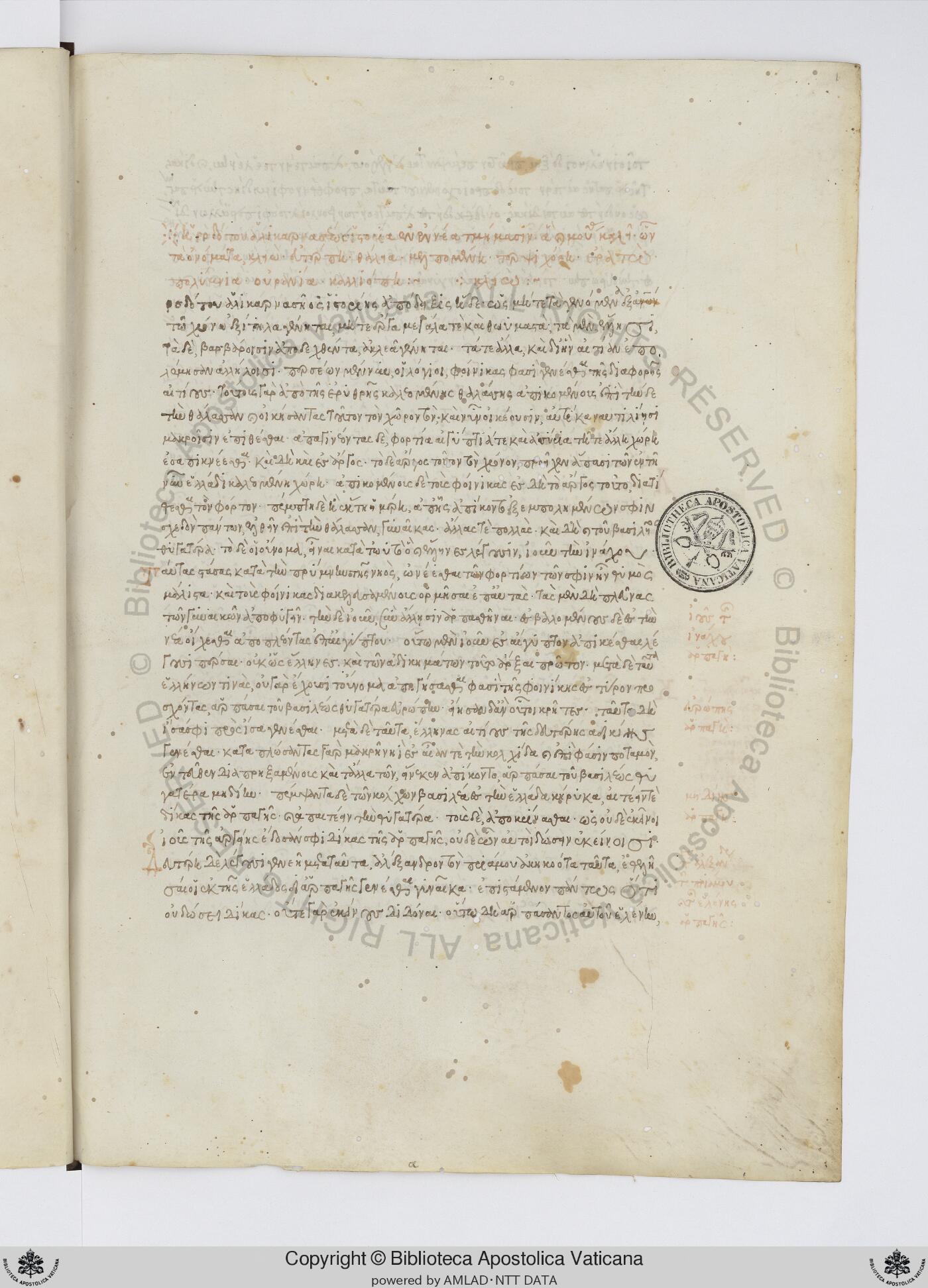
426 canvases in the checked manifest. Herodotus proem and opening 1.1 visually identified at frame 9. Pinakes contents are now checked separately; the catalogue dating conflicts with the Book I commentary. No full image-range or legibility audit.
Scholarly catalogue ↗ · Image metadata ↗
Vienna, Österreichische Nationalbibliothek
Shelfmark transcribed from Wilson’s sigla; repository endpoint and digitization not independently verified in this cycle.
Repository destination not independently verified in this cycle.
Biblioteca Apostolica Vaticana
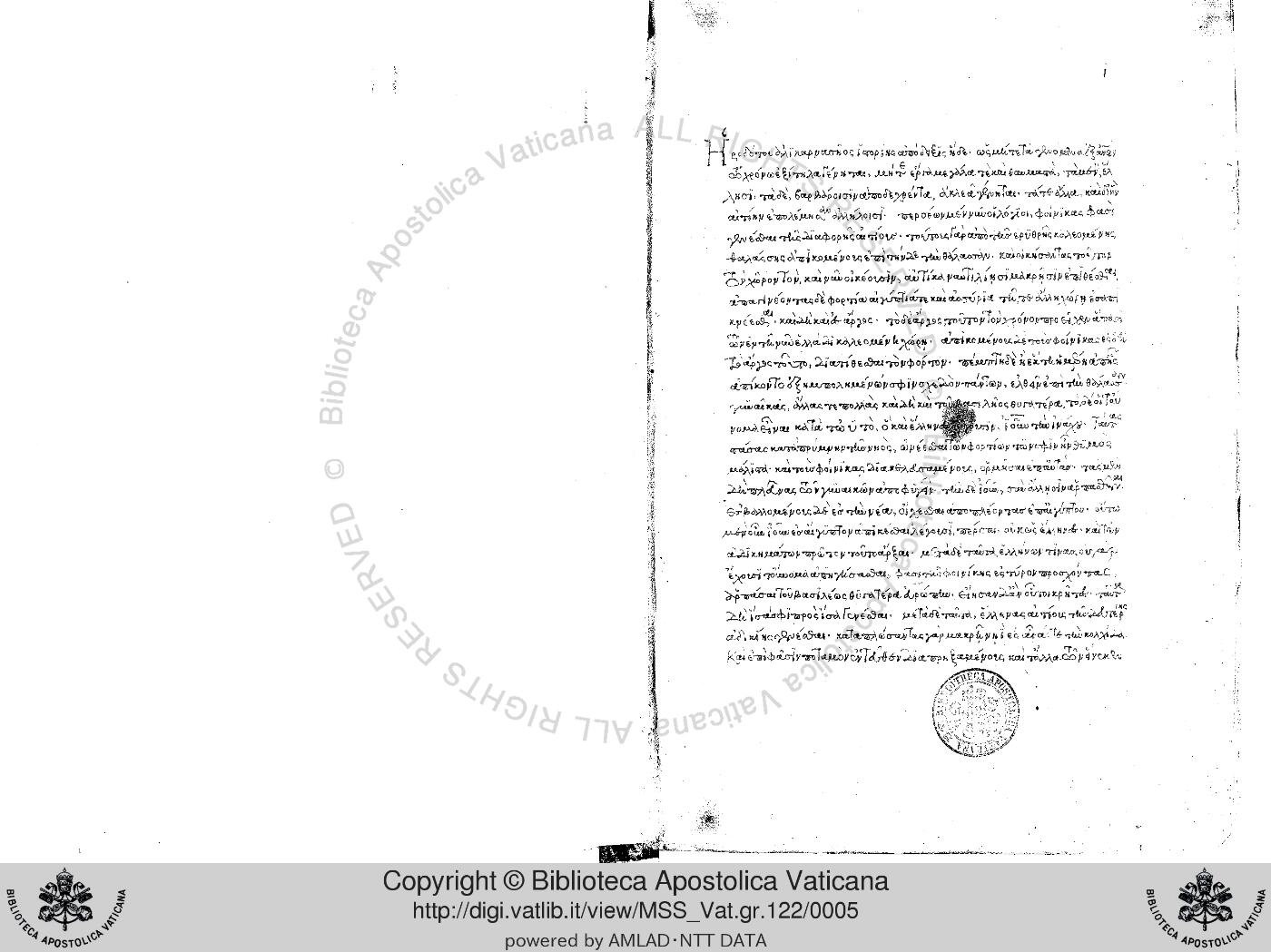
307 canvases in the checked manifest. Herodotus proem and opening 1.1 visually identified on the right-hand page of frame 5. Pinakes contents are now checked separately. No full image-range or legibility audit.
Scholarly catalogue ↗ · Image metadata ↗
Wilson’s remaining preface discusses dialectal uncertainty, papyri, indirect tradition, Valla’s Latin translation and editorial history. These are distinct evidence types. Opening images for U and X have been inspected and catalogue ranges recorded; full image coverage and passage-to-folio alignment remain unverified. Rosén’s manuscript argument has not been inspected.
Download the source crosswalk · Return to the research atlas · Herodotus work map