
Column spacing
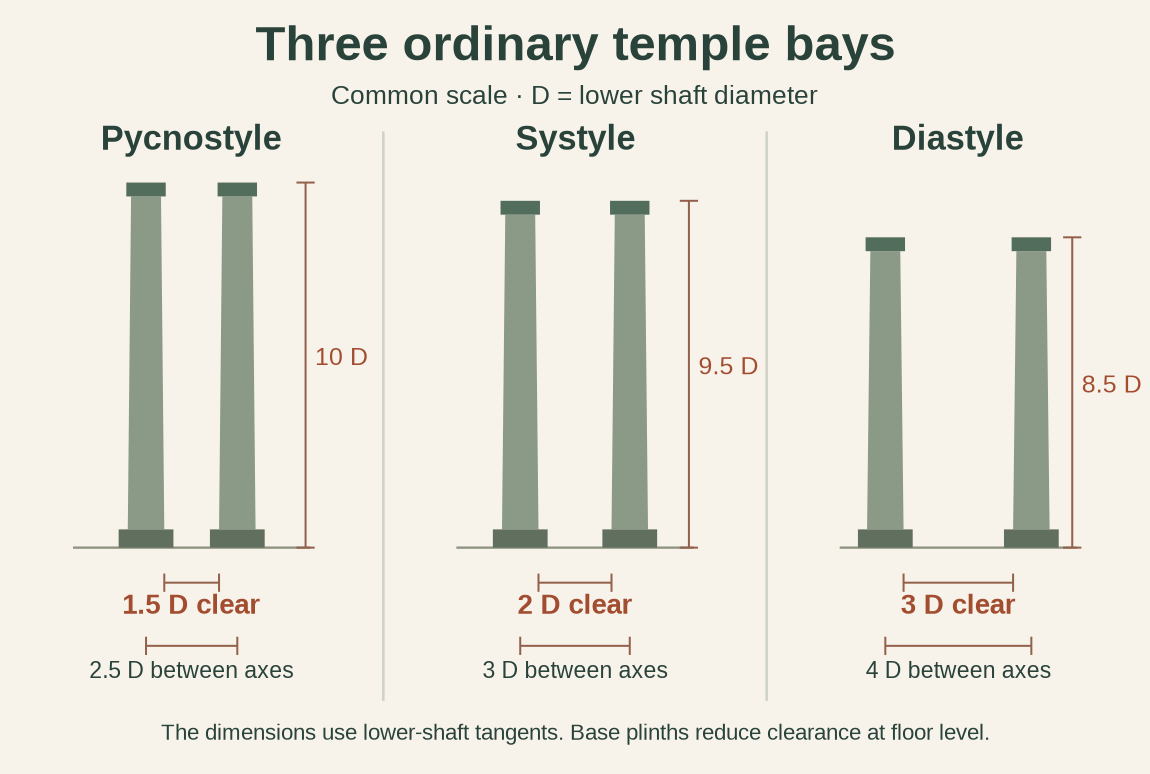
Vitruvius measures the open interval in lower shaft diameters. Each diagram holds that diameter constant so the height and spacing can be read together.
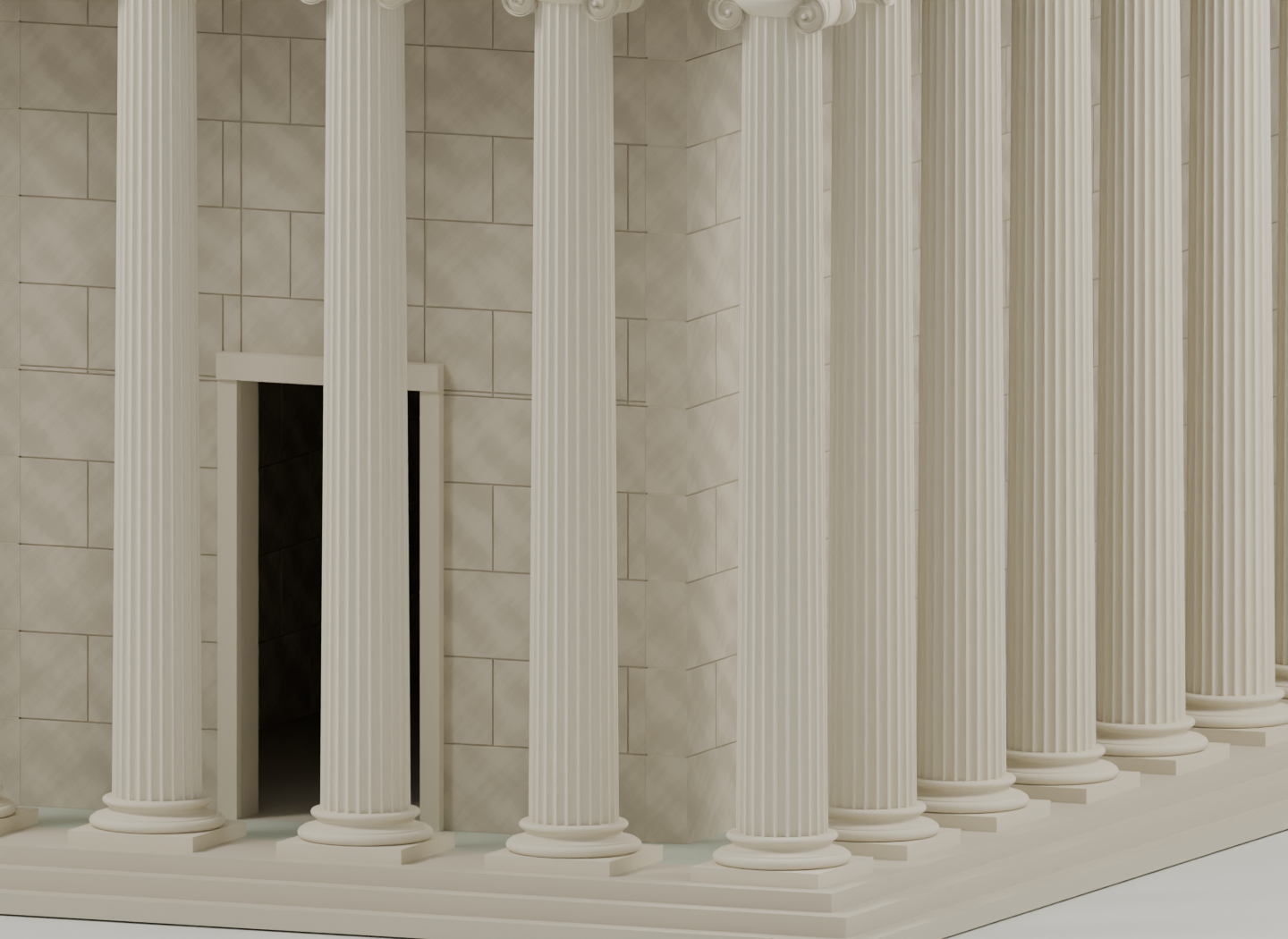
At the corner
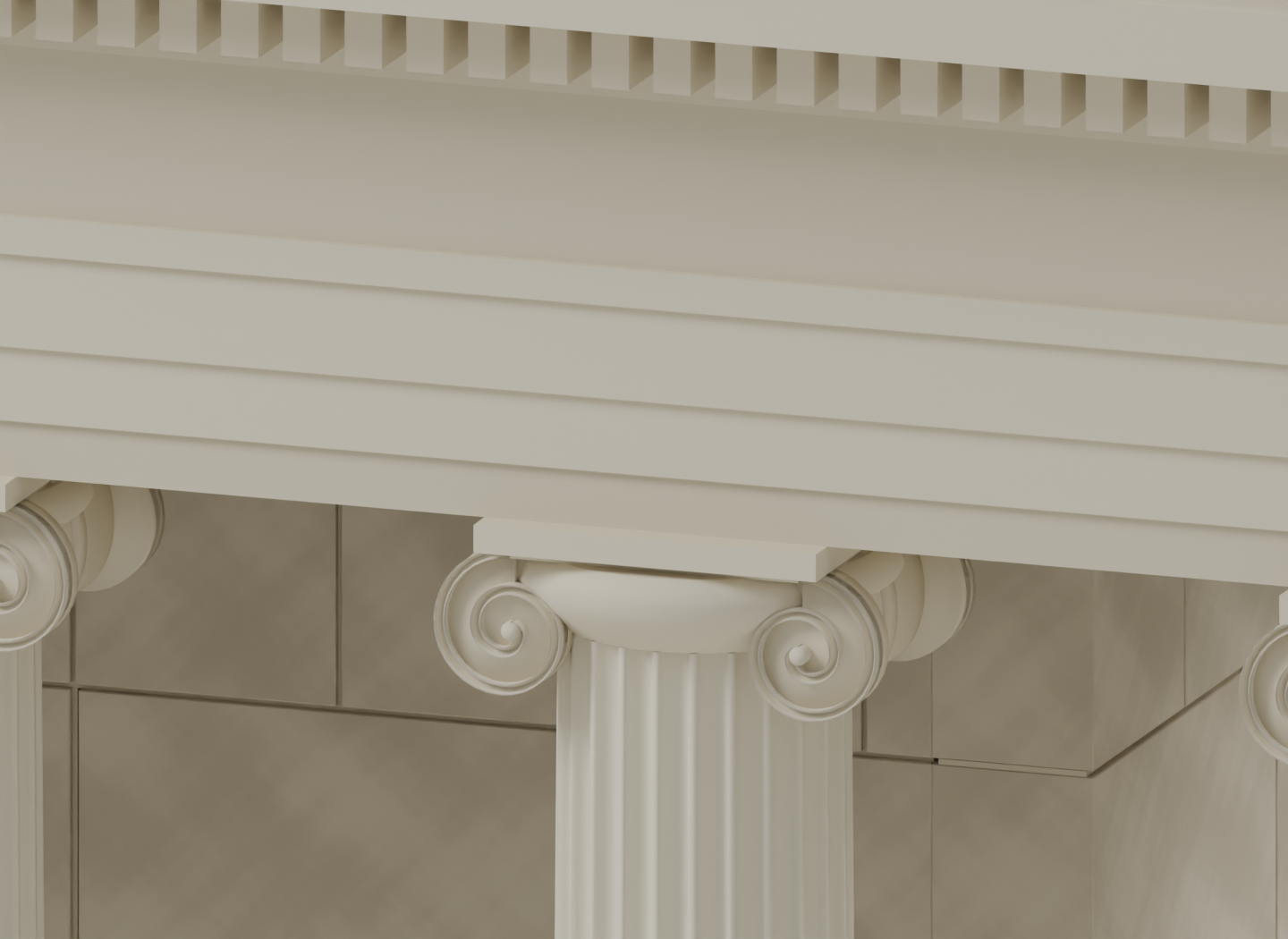
Above the shaft
How the taper is chosen
The height of the complete column is 10 D. A selected equivalent of 24 textual feet puts it within the twenty-to-thirty-foot diminution range of De architectura 3.3.12. The ordinary upper diameter is 6/7 D. The shaft follows a straight profile between the end diameters.
| Column height in textual feet | Upper to lower diameter |
|---|---|
| Up to 15 | 5/6 |
| 15–20 | 11/13 |
| 20–30 · modelled branch | 6/7 |
| 30–40 | 13/15 |
| 40–50 | 7/8 |
For greater heights the text calls for proportional diminution. The reference to entasis in 3.3.13 concerns the middle profile, a distinct question from the two end diameters. Rowland and Howe, Book III and commentary
Roman temples in 3.3.2
The Temple of Divus Julius was dedicated in 29 BCE. The excavations of 1950–54 recovered much of its ground plan, including evidence for the elevated temple complex. Digital Augustan Rome, plan and bibliography
Caesar dedicated the Temple of Venus Genetrix in 46 BCE. The standing remains and the columns reassembled in 1933 belong to its Trajanic rebuilding. Sovrintendenza Capitolina, temple history · Trajanic remains
Gros uses archaeological variations to distinguish the broad usage of the term from the precise diagram of 2.5 D between ordinary axes. Gros, Aurea Templa, pp. 102–103